BEE FRIENDLY vineyard Bordeaux
BEE FRIENDLY: Protecting Bees and Biodiversity in Our Bordeaux Vineyards Since 2019
At Château Gueyrosse and Domaine Chante Alouette Cormeil, we believe that being a winegrower means much more than simply growing grapes and making wine. It also means caring for our natural surroundings, protecting biodiversity and preserving our land for future generations.
This is why we chose to join the BEE FRIENDLY initiative, a certification programme dedicated to protecting bees and other pollinating insects.
Since the 2019 vintage, our two family-run wine estates have been committed to this environmental approach, alongside our commitment to organic viticulture.
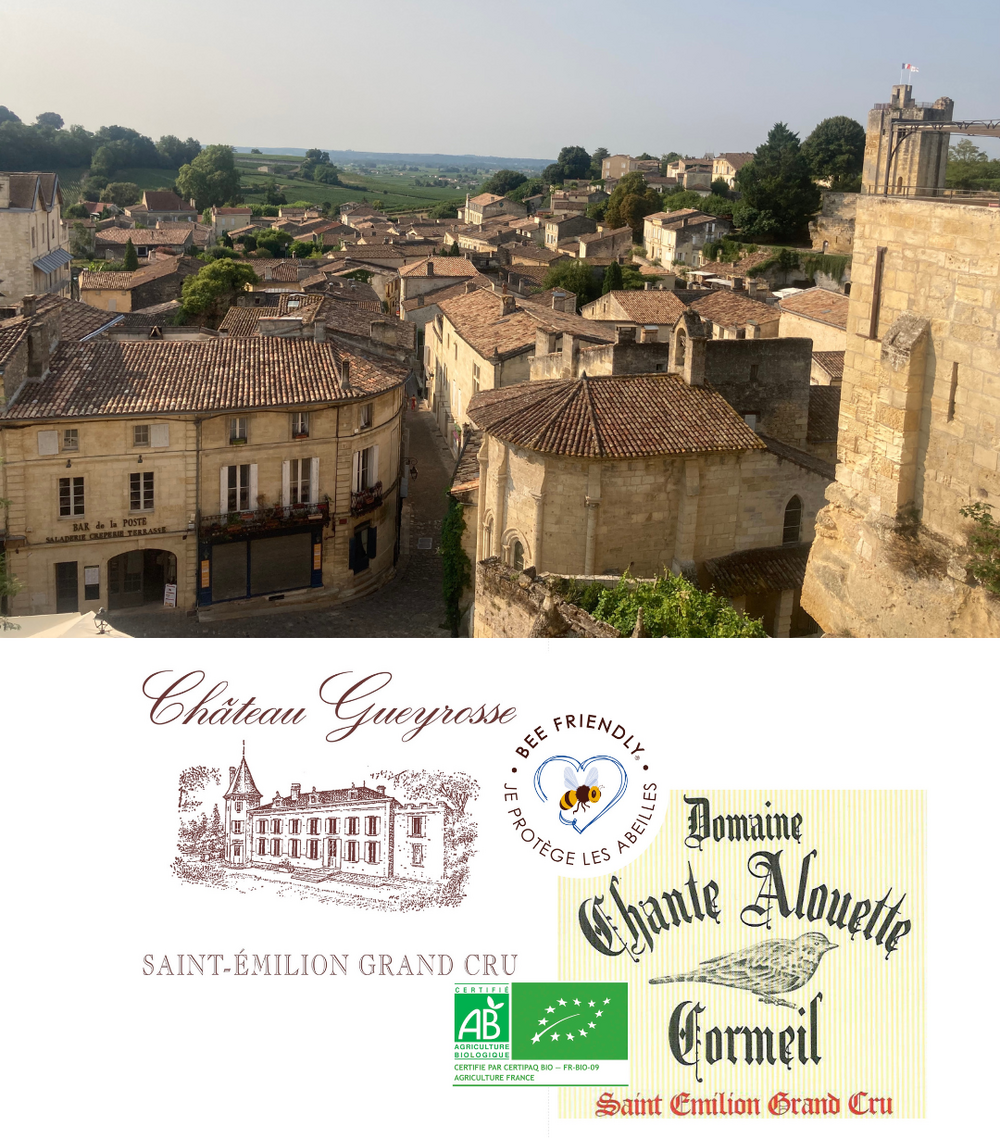
For visitors exploring the Bordeaux wine region and the famous vineyards of Saint-Émilion, we would like to share another side of winegrowing: the relationship between vineyards, nature and biodiversity.
Why did we choose BEE FRIENDLY?
Bees and other pollinating insects play an essential role in our ecosystems. By pollinating wild plants and many cultivated species, they help maintain biodiversity and contribute to the natural balance of our environment.
Unfortunately, pollinator populations face increasing challenges, including the loss of natural habitats, fewer food sources, environmental degradation and exposure to certain agricultural chemicals.
As winegrowers, we are aware that the way we cultivate our vineyards has a direct impact on the surrounding environment.
We therefore wanted to go further in our environmental commitment by joining a programme specifically designed to protect pollinators.
BEE FRIENDLY was a natural choice for us. It reflects our vision of winegrowing: producing quality grapes while encouraging nature and biodiversity to flourish alongside our vines.
Our BEE FRIENDLY journey: from 2018 to the first certified vintage in 2019
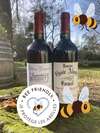
Our journey with BEE FRIENDLY began in 2018.
Before officially joining the programme, we wanted to understand its requirements and assess how our vineyard management and environmental practices could meet its standards.
We contacted the Libourne Beekeeping School (Rucher École de Libourne) to exchange ideas with beekeepers and representatives of the certification programme.
These discussions were particularly valuable. They helped us better understand the needs of pollinators and identify practical ways to improve biodiversity across our estate.
With the help of a botanist, we also mapped the plant species in our wooded park that are particularly attractive to pollinating insects. We studied the benefits of the green cover crops planted between our vineyard rows.
Following this preparatory work, we decided to apply for certification from the 2019 harvest.
Since then, Château Gueyrosse and Domaine Chante Alouette Cormeil have successively obtained BEE FRIENDLY certification for vintages 2019 to 2025.
This recognition reflects year-round work and a long-term commitment, rather than a one-off environmental initiative.
BEE FRIENDLY: three key priorities for protecting pollinators
The BEE FRIENDLY certification takes a comprehensive approach to protecting bees and other pollinating insects.
It focuses on three main areas:
1 - Responsible plant protection practices
The certification includes a blacklist of insecticides considered particularly harmful to bees.
The aim is to reduce the risks associated with agricultural practices and encourage farming methods that are compatible with the presence of pollinators.
2 - Encouraging biodiversity
Protecting pollinators also means preserving and developing the food sources and natural habitats they need.
Hedgerows, flowering meadows, trees, green cover crops and natural spaces all play an important role.
3 - Building relationships between winegrowers and beekeepers
Protecting bees requires cooperation between different people working in the countryside.
Exchanging knowledge and experience between winegrowers and beekeepers helps everyone better understand the challenges and develop more environmentally responsible practices.
This collective approach is essential to protecting pollinators over the long term.
In our vineyards: cover crops that support biodiversity
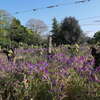
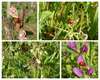
One of the practical measures we have introduced is the annual planting of green manure cover crops in autumn.
Our seed mixture includes vetch, oats and crimson clover.
These plants offer several benefits.
They help improve soil fertility, enhance soil structure, encourage biological activity and contribute to the natural management of organic matter.
But their benefits go much further.
In spring, when these plants flower, they become a valuable food source for insects.
Crimson clover and vetch are particularly attractive to bees, bumblebees, hoverflies and other pollinators.
These flowering cover crops also encourage the presence of beneficial insects, which contribute to the natural balance of the vineyard ecosystem.
We also encourage spontaneous vegetation in and around some vineyard plots.
Rather than considering every wild plant as a competitor to the vines, we prefer to understand its role within the wider ecosystem.
Greater plant diversity encourages greater insect diversity, which in turn provides food for other wildlife.
For us, a vineyard should be a living environment, not simply rows of grapevines.
Preserving trees, hedgerows and natural habitats
A vineyard is much more than the rows of vines themselves.
To understand and encourage biodiversity, we need to look at the entire estate: cultivated plots, paths, hedgerows, trees, gardens, buildings and natural spaces.
At Château Gueyrosse, our wooded and flower-filled park, located alongside the Dordogne River, provides a particularly valuable natural environment.
With the help of a botanist, we have identified several plant and tree species that are beneficial to wildlife and pollinators, including:
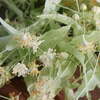
- Lime trees, appreciated by pollinating insects for their flowers.
- Strawberry trees, which provide valuable resources for insects.
- Hazel trees, whose early flowering can provide food for pollinators at the end of winter.
- Wild plum trees, which contribute to the diversity of flowering plants.
- Hackberry trees, whose fruits provide food for birds.
Trees and hedgerows are not simply decorative features of the landscape. They provide habitats, shelter and food for many species.
They also support a wide variety of wildlife, including birds, squirrels, bats and numerous insects.
Old stone walls, traditional farm buildings and less intensively maintained areas can also provide shelter for different species.
Our aim is to preserve a living environment in which every element of the landscape contributes to the natural balance of the estate.
Biodiversity throughout our estate
Our commitment to organic farming and BEE FRIENDLY extends beyond the vineyard plots.
We want the entire estate to be a welcoming place for nature.
Our flower-filled garden, wooded park and the natural surroundings of the Dordogne River all contribute to this approach.
We have also developed an educational approach to the plants and trees growing on our property.
Visitors can discover the different plant species and learn about their importance for bees and other pollinating insects.
This desire to share our knowledge led us to organise training sessions for our staff from 2022 onwards, as well as themed half-day events for our customers, with the participation of a botanical guide.
We firmly believe that getting to know nature better is the first step towards protecting it.
Organic winegrowing and BEE FRIENDLY: two complementary commitments
Our commitment to organic viticulture officially began in 2018, following three years of conversion. The 2021 vintage was our first certified organic vintage.
We wanted to combine this approach with BEE FRIENDLY certification.
Both commitments reflect the same philosophy: developing vineyard practices that take greater account of the environment.
Organic certification governs our production methods and the use of authorised products.
BEE FRIENDLY places particular emphasis on protecting bees, pollinating insects and their natural habitats.
Together, these commitments encourage us to observe, understand and continuously improve the way we work.
For us, they are not simply labels to display on a bottle. They represent an ongoing commitment that is part of our everyday work as winegrowers.
A family vineyard and a commitment to future generations
Being a winegrower means following the seasons, understanding the soil, observing the growth of the vines and adapting to natural conditions.
It also means recognising that the quality of our environment is essential to the future of our profession.
We are fortunate to work in a beautiful natural setting in the Bordeaux wine region, in Libourne, close to Saint-Émilion and alongside the Dordogne River.
We want to preserve this natural heritage and pass on a living, diverse and wildlife-friendly estate to future generations.
Our BEE FRIENDLY commitment is also an invitation to look at vineyard landscapes differently.
Behind every row of vines lies a whole ecosystem worth protecting.
A few wildflowers, a green cover crop, a preserved tree, a hedgerow or a sheltered habitat for birds can all contribute to biodiversity.
Protecting pollinators also means taking care of our vineyards, our landscape and our future.
Discover our BEE FRIENDLY commitment at Château Gueyrosse
If you are visiting Saint-Émilion or exploring the Bordeaux wine region, we would be delighted to welcome you to Château Gueyrosse.
Our family-run vineyard offers an opportunity to discover another side of Bordeaux winegrowing: the connection between wine, nature and biodiversity.
During your visit, we will introduce you to our organically farmed vineyards, explain the role of our flowering cover crops, and take you through our wooded and flower-filled park.
You will also have the opportunity to learn about the plants that support pollinators along our Bee Trail, as well as discover some of the estate's remarkable trees along our Tree Trail.
The visit continues with a tour of our wine cellar and barrel ageing cellar, followed by a guided tasting of two wines from our family estates.
You will be welcomed personally by the owners, Yves or Samuelle Delol, who will be happy to share their knowledge and answer your questions.
Whether you are a wine enthusiast, interested in sustainable winegrowing, travelling as a couple or simply curious to discover the Bordeaux countryside, we look forward to sharing our passion with you.
- Free vineyard tour and wine tasting
- Family-run wine estate
- Organic and BEE FRIENDLY certified
- Personal welcome by the owners and winemakers
- French and English-speaking visits
- Open all year round by appointment
- Dogs are welcome throughout the visit, including inside our wine cellars, when kept on a lead.
Château Gueyrosse – Vignobles Yves Delol 24 chemin de Gueyrosse 33500 Libourne – France
Telephone: +33 (0)5 57 51 02 63
Email: gueyrosse@free.fr
Just 12 minutes from Saint-Émilion and 40 minutes from Bordeaux.
Looking for an authentic vineyard experience near Saint-Émilion? Come and discover our family vineyard, our organic wines and our commitment to protecting bees and biodiversity.