What to visit in Saint-Emilion? History, village & family winery
Saint-Émilion: a day between medieval history and a family-run winery
Located in the heart of the Bordeaux wine region, Saint-Émilion is a unique destination where history and wine are deeply connected. Listed as a UNESCO World Heritage Site, this medieval village offers a journey through time, blending stone architecture, spirituality, and winemaking traditions.
The origins of Saint-Émilion: a monk, a cave, a village
The history of Saint-Émilion dates back to the 8th century, when a Breton monk named Emilion came in search of peace and solitude. He settled in a cave carved into the limestone, which can still be seen today.
Around this spiritual site, a religious community gradually developed. Thanks to its strategic location between Bordeaux and inland territories, the village quickly expanded.
Limestone became a key resource: it was used both for construction and excavation. This is how underground cellars, galleries, and the impressive monolithic church—entirely carved out of rock—were created.
The Middle Ages: golden age of the village and rise of the vineyard
During the Middle Ages, Saint-Émilion became an important religious and commercial center. The vineyard developed around the village, supported by trade with England, then under the rule of English kings.
Saint-Émilion wines were already exported to London as early as the 12th century, contributing to the region’s prosperity.
It was also during this period that the Jurade of Saint-Émilion was established, an institution responsible for managing the town and ensuring wine quality. This tradition still exists today through ceremonial events held in the village.
The ramparts, fortified gates, and the King’s Tower (Tour du Roy) remain as witnesses to this prosperous era.
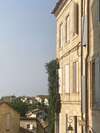
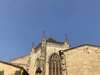
A unique architecture above and below ground
What makes Saint-Émilion truly unique is the coexistence of two worlds:
- a medieval village above ground, with narrow streets and historic monuments
- an extensive underground network carved into limestone
The monolithic church, catacombs, and galleries highlight the remarkable craftsmanship of past builders. The extracted stone was used to build Bordeaux and surrounding areas, leaving behind these fascinating underground spaces.
From heritage to UNESCO: a vineyard-shaped landscape
Since 1999, Saint-Émilion has been listed as a UNESCO World Heritage cultural landscape. This recognition reflects the deep connection between the village and its vineyards.
Here, wine is not just an economic activity—it has been part of the region’s identity for over 1,000 years.
How to plan your day in Saint-Émilion
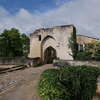
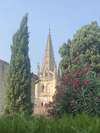
Morning: explore the historic village
Walk through cobbled streets, visit the monolithic church, and climb the King’s Tower for panoramic views over the vineyards.
Lunch: enjoy local gastronomy
Take time to relax and enjoy the local cuisine in the village.
Afternoon: visit a family-run winery
After discovering the village’s history, extend your experience in a place where tradition is still alive today.
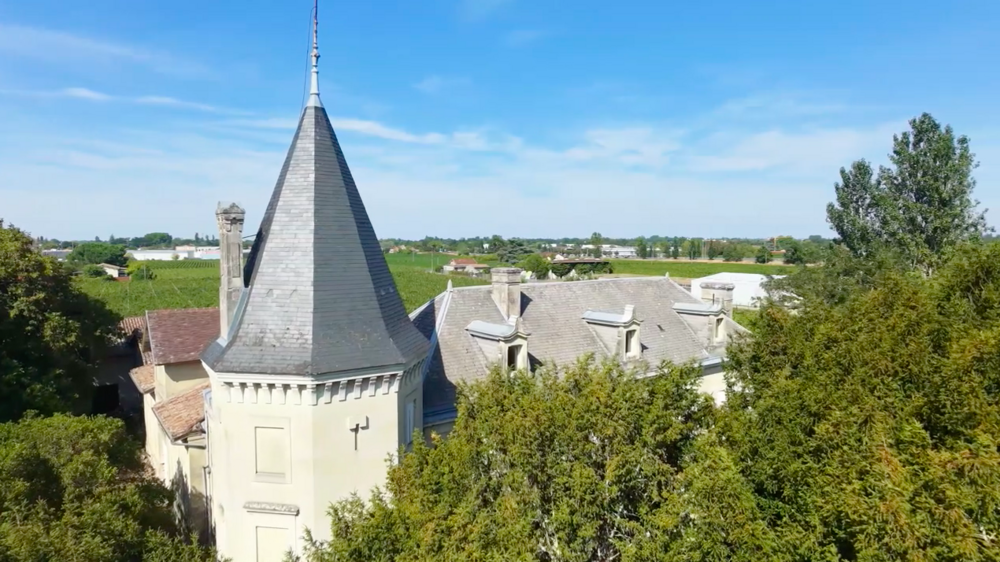
Just 12 minutes from Saint-Émilion, Château Gueyrosse – Vignobles Yves Delol welcomes you for an authentic wine experience.
At this family-run organic vineyard:
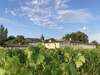
- vines are cultivated using organic farming methods
- the estate remains small and human-sized
- the winemaker personally welcomes you
You will discover:
- the vineyard and its natural environment
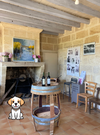
- the vat room and barrel cellar
- the winemaking process
The visit ends with a guided tasting of Saint-Émilion Grand Cru wines in a warm and authentic setting.
A connection between past and present
What makes Saint-Émilion so special is this continuity between history and modern life.
Monks, merchants, and winemakers have shaped a landscape that still lives to the rhythm of the
vine.
Visiting a family winery allows you to become part of this living heritage.
Why combine village and vineyard?
To truly understand Saint-Émilion, you need both:
- explore its historical heritage
- meet the people who make the wine today
This combination creates a complete and meaningful experience.
Practical information
✔ Free visit by appointment
✔ French / English spoken
✔ Dogs welcome (on a leash)
✔ 12 minutes from Saint-Émilion – 40 minutes from Bordeaux
Conclusion: experience Saint-Émilion differently
Saint-Émilion is not just a place to visit—it’s a place to experience.
Between centuries of history, vineyard landscapes, and human connections, every moment here is a journey into a unique way of life.
And to truly discover this authenticity, nothing compares to visiting a family-run winery.
Book your visit at Château Gueyrosse and experience the living history of Saint-Émilion.
Accès & localisation – Château Gueyrosse
Château Gueyrosse
24 chemin de Gueyrosse
33500 Libourne – France
À 12 min de Saint-Émilion Grand Cru – 40 min de Bordeaux
Accès facile en voiture
Accessible à vélo depuis Libourne
Gare de Libourne à proximité
Arrêt de bus “Gueyrosse”
Coordonnées GPS
Longitude : -0.220593
Latitude : 44.89511